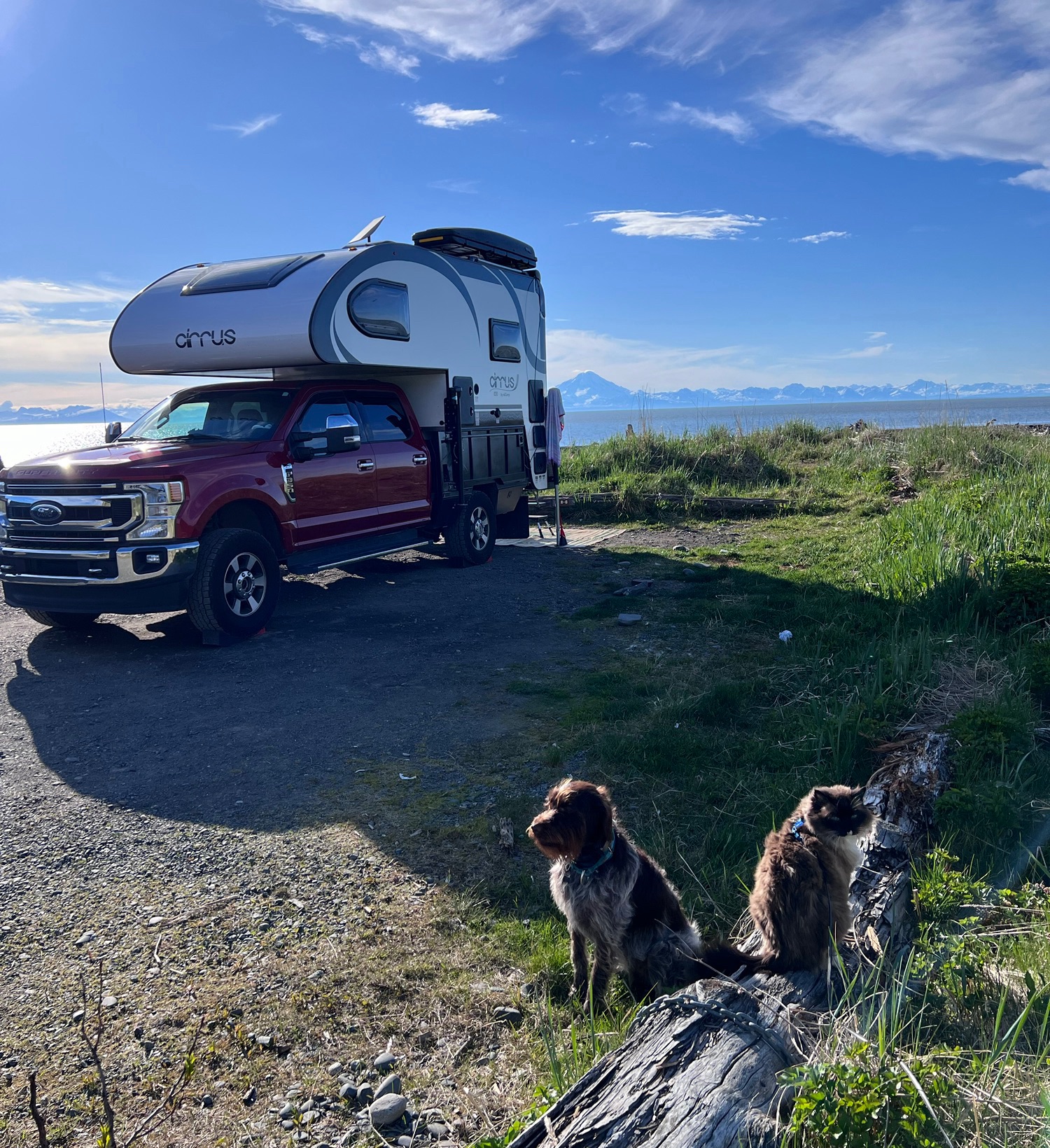
What we’ve (really just the handy husband, I’m totally the cheerleader in this case) have done electrically in the camper to make us able to work/live full time without running a generator all day… As I sit here typing this listening to our neighbors’ dueling generators at almost 11 pm at night… 🙄
First thing’s first, make a plan of what you want your system to accomplish and do the research. For us it was important to have a good battery bank, but also to be able to run the A/C while not hooked up to power if we absolutely had to for the pet‘s health as we will be heading towards the hotter climates this fall. We chose Victron because of known quality and warranty. We are not affiliated with Victron nor paid for this post. (Hey Victron if you’re reading this we’d be happy to consider it though 😉).
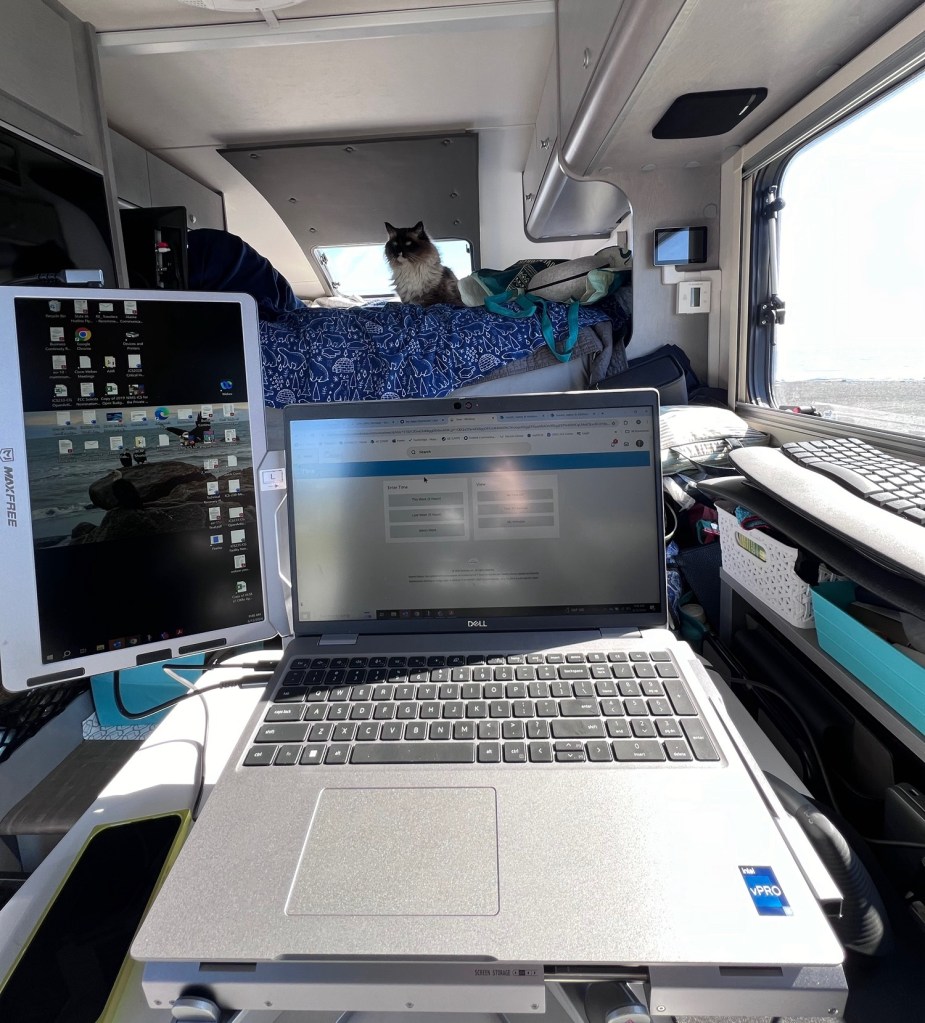
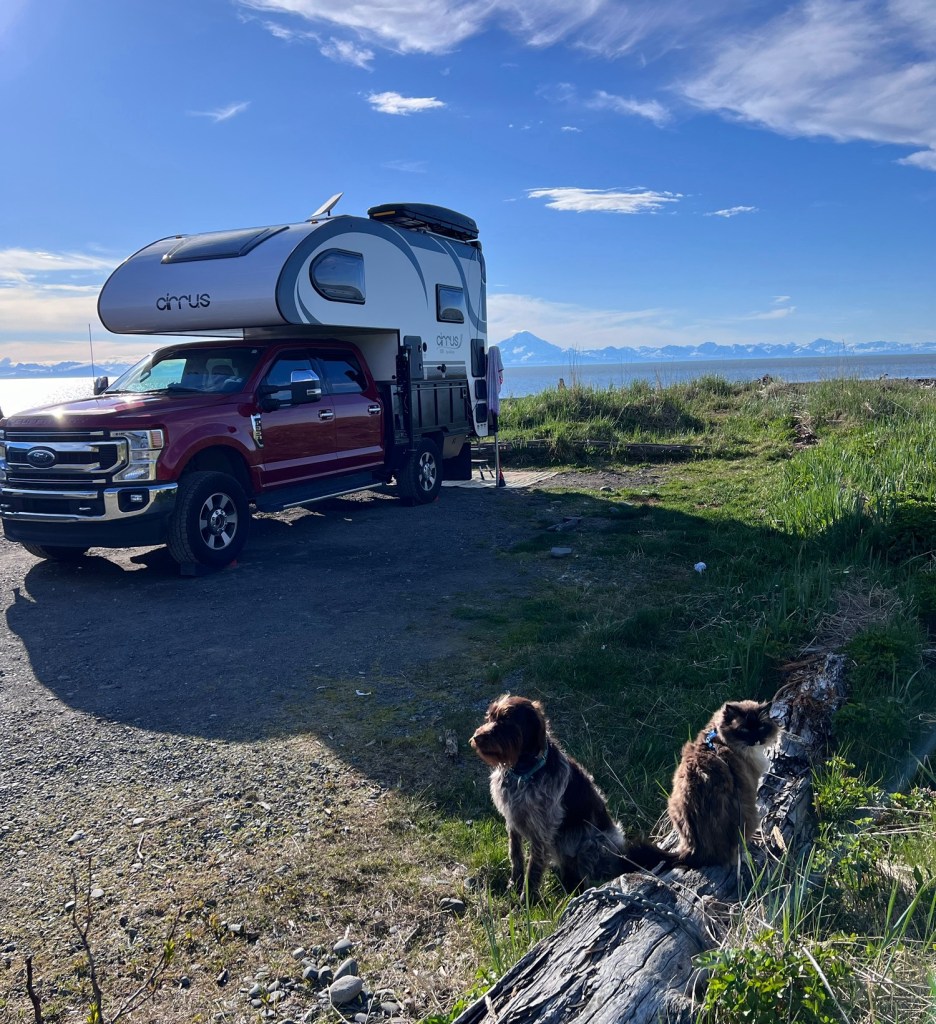
Our jump off point; our camper came with two led acid batteries, a 210 watt flexible but fixed solar panel mounted to the roof, a 75 v smart solar charger, an “intelligent” converter, and a 1200 watt inverter. By our calculations we would have been able to make it through the end of a work day before needing to run the generator in the evening to charge. And we definitely wouldn’t be able to run the air conditioner unless plugged in or on generator the entire time.
Knowing all that, we (he 😂) set out to do some mods. Some of the parts we chose were for space (we don’t have much of it). But mostly we found components that would do what we wanted, did some exact measuring, and a bit of rearranging to make sure they’d fit. In some cases we had to sacrifice a little; like where we originally bought six of the Renogy batteries but could only fit five in the camper no matter how hard we tried, so it ended up going to the in-laws to support their rv’ing habits.
Into the thick of it…
The hands on part of this adventure began with batteries. We chose Renogy because they were cost effective lithium batteries with decent reviews. Of the six we purchased, two have internal heating components because they go in the compartment facing the outside, and Lithium won’t charge in colder temperatures. Along with replacing the two old batteries and adding the three additional batteries we upgraded the wiring to 3/0 wire (this means much bigger wire for us non electric folks).
To monitor the batteries charge and discharge we added the SmartShunt. Giving an accurate SOC (state of charge).
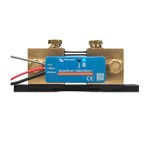
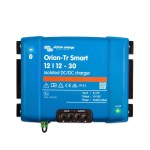
After the SmartShunt we added the DC-DC charger to be able to charge those batteries while driving. We designed our setup to be mobile (no park sitting for months) and will cover a lot of ground so having the ability to use the truck to charge while driving is a huge plus. Our truck came with the plow and tow package so it already had the heavy duty second alternator installed which was a bonus.
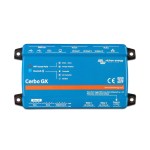
Once we had those additions/upgrades we knew the complexity of the system was going to continue to grow so it was natural to want visibility into it, especially since we’ll be so reliant on it, so we installed the Cerbo for monitoring and data logging.
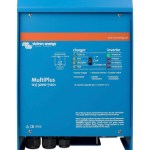
The next upgrade and major component (including size; we had to rearrange some things for this one) was to replace the inverter and converter with the multi plus sine wave inverter charger combo. Simply put, the converter side charges the lithium batteries, and the inverter side turns the stored power from DC to AC power so we can use normal plugs for electronics. Side note, we did leave the existing converter in the electrical compartment just in case, it’s just not hooked up.
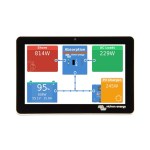
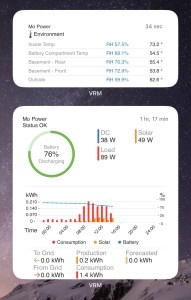
As our system started to take shape we decided to upgrade the monitor on the inside of the camper to this Victron touch screen display unit to tie everything together where we can control and monitor the system visually. The hubs has apps on his phone, and even created a cool iPhone widget so he can see a lot of this on his phone, but having something inside where we can just press the screen to turn the inverter on or off, or see how things are flowing is nice.
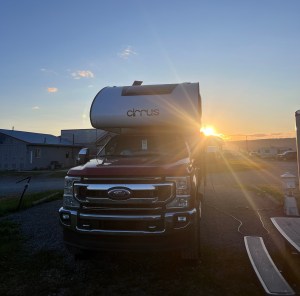
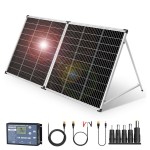
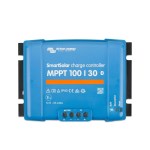
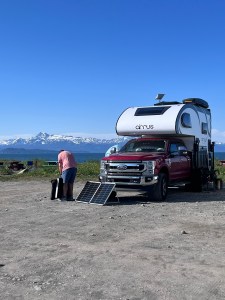
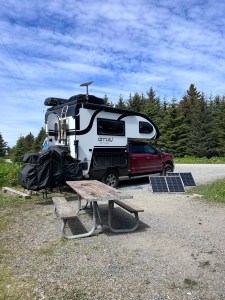
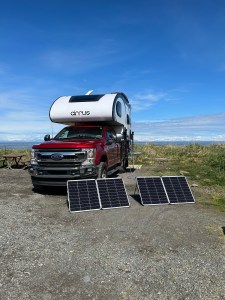
Coming in on the final stretch after much thought (and learning that the fixed solar panel on the roof wasn’t as efficient as we hoped because it curves with the roof and can’t move with the sun), we decided to add some more solar capability. Think Tim the Tool Man Tayler “Aurgh aurgh aurgh More Power”. We decided to go with portable solar panels 1) to be able to chase the sun, and 2) to allow us to use the space on the roof for our roof racks (i.e. our inflatable standup paddle boards and fishing gear that I was really thankful we could find space for). I can’t say they are small, but we have been cranking about 450 watt solar input when the whole system is set up and the sun is shining so in this case finding a space for them is worth it. Instead of replacing the existing solar charger we ended up just adding another one out of ease.
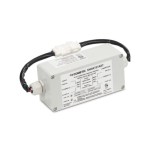
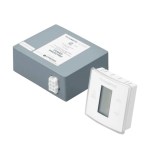
Last but not least, to complete the process and ensure the system was able to do what we set out for it to do, we installed a smart start (soft start) addition to our air conditioner so it doesn’t overload the inverter when it starts up. And then a want and not need, but to make it easier on us we also installed a digital thermostat.
Of course there were a few bus bars, a couple breakers, and a couple inline fuses added into this whole thing along the way but that is super into the weeds. We could provide that info if you really want it, just reach out. Also to note we upgraded all the wire to 6ga wire everywhere that wasn’t the 3/0 battery wire just to be on the safe side. Calculations were done and all the wiring meets the minimum draw requirements for the electrical system.
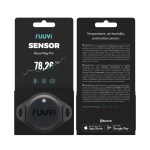
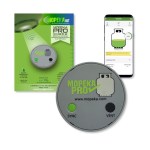
I guess the final “upgrades” for real this time, really just an honorable mention, is the addition of temperature sensors and propane tank sensors that tie into the monitoring system to give us a complete picture of our camper. The temperature sensors were handy this winter when we were camping in negative temps (this four season camper is exactly what it says it is, we had no problems staying warm in -10 degrees with 30 mile an hour winds), and going forward we have high heat alarms set for pet health. The propane sensors are just because we are creatures of comfort and now we don’t have to guess or shake the tank to know when we need propane.
In our defense we were left unsupervised…
If you made it this far, Thanks for reading. We’d be remiss if we didn’t say that even though he’s amazing he is not a licensed professional so we urge you to do your research and consult with someone who is if you plan on taking on a full system overhaul. We just hope our journey helps someone out there who was looking for more information. Though, I could see where you might be thinking there’s no way all of this was crammed in that camper, but I assure you it is. Maybe this smart hubby of mine is actually a magician and under the steps and seats of this camper is actually his own version of a Mary Poppins bag.
 The Adventures of Butthole Kitty & Briggs